Introduction
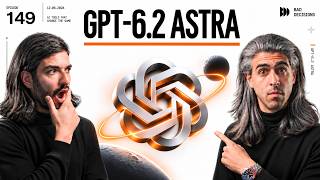
An analysis of the GPT image 2.6 model's capabilities, which introduces animated image and GIF creation. The discussion also covers AI's impact on creative industry workflows and upcoming changes to Unreal Engine.
Key takeaways 5
The gist of the content in a few sentences
- The model offers greater detail precision and the ability to generate GIF animations directly from an image.
- Currently, around 4 billion images are created weekly on ChatGPT, leading to a mass production of content.
- Version 2.6 handles caustics in glass significantly better and maintains better character consistency during revisions.
- The new version will treat the web as a native platform, eliminating the need to stream heavy projects.
- There is speculation that Claude could dominate the visual market by integrating external APIs without additional markups.
Video chapters 34Click and the video will play from the selected moment
- 1:13Discussion on generational differences
- 2:22What's new in GPT image 2.6
- 3:03The scale of AI image generation
- 3:12The scale of AI image generation
- 5:27The future of video and GPT version comparison
- 6:34Comparing GPT Image 2.5 and 2.6 models
- 9:29Prompt precision and object placement
- 12:45Testing element placement precision in images
- 12:59The importance of accuracy in character sheets
- 14:52Color and material accuracy
- 15:39Detail consistency in character sheets
- 16:10Initial GIF animation tests
- 16:26Comparing versions 2.5 and 2.6 in animations and images
- 20:32Precise image editing in ChatGPT 2.6
- 22:30Impact of new tools on workflow and the Ramp report
- 22:56Analysis of corporate spending on AI tools
- 26:18Invideo AI Agent 2 as creative support
- 27:54The evolution of Unreal Engine in the AI era
- 30:03The potential of native browser games
- 30:36Unreal Engine 5.9 and the end of streaming
- 31:28Drawbacks of streaming and the role of AI in optimization
- 33:07New Unreal Engine capabilities and AI integration
- 33:07Free access to Quixel and the future of the engine
- 37:44What's new in Unreal Engine and the role of AI subscriptions
- 39:00Content authenticity in the age of artificial intelligence
- 39:31Claude Personal Finance and spending analysis
- 40:54Controversies surrounding Sylvia and Anthropic
- 43:56Threats to niche AI applications
- 46:26The advantage of reasoning models over functionality
- 46:54The role of infrastructure in delivery services
- 47:05Aggregator security and aggressive marketing
- 48:58Aggressive marketing in the AI industry
- 51:14Speculations on Anthropic's strategy
- 53:28Anthropic's visual content strategy
Summary
First 3 of 34 partsDiscussion on generational differences
The speakers begin the meeting with a playful exchange about age and generational identity. One participant is labeled a "boomer," despite claiming to be on the border between Gen Z and millennials. During the conversation, it is stated that 1997 was the last year of Gen Z, although the speaker's behavior is described as typical of older generations.
What's new in GPT image 2.6
The main technological topic is GPT image 2.6, the latest imaging model from OpenAI. According to the speaker, this tool is characterized by greater speed and better precision, allowing for the maintenance of character and brand detail consistency after edits. The most significant change compared to version 2.5 is the ability to create animated images and GIF files directly from a generated photo.
The scale of AI image generation
The speaker cites statistics provided by OpenAI to illustrate the tool's immense popularity. According to the information, 4 billion images are created weekly on ChatGPT, which averages out to about half a billion graphics every day.
Read the full summary – for free
31 parts of text left, key takeaways, facts, questions and answers, action items – with the source minute for every passage. Plus search, collections and the AI assistant.
Keep reading for freeFree, in a minute. Have an account? Log in