Introduction
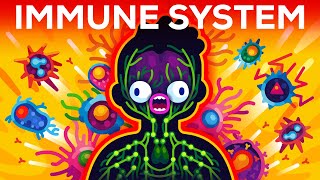
An exploration of the immune system, described as a complex biological army that produces billions of cells daily to protect the body from microorganisms and cancer.
Key takeaways 5
The gist of the content in a few sentences
- Macrophages and neutrophils act as the initial defense, with neutrophils often using a suicide mechanism to trap bacteria.
- Blood vessels allow fluid and complement proteins to enter the site, creating holes in invading bacteria.
- Dendritic cells collect bacterial samples and travel to lymph nodes to activate specific helper T cells.
- Activated helper T cells coordinate the attack and trigger B cells to produce thousands of antibodies per second.
- After infection, some cells transform into memory cells to provide lifelong protection against specific pathogens.
Video chapters 4Click and the video will play from the selected moment
Summary
First 3 of 9 partsThe Structure and Function of the Immune System
The Immune System is described as the most complex biological system known after the human brain. It is not an abstract entity but a physical part of human biology consisting of hundreds of tiny organs and two large ones, supported by its own transport network throughout the body. This system functions like an army, producing hundreds of billions of fresh cells daily to protect the body from microorganisms and cancerous cells.
First Response to Bacterial Invasion
When the body is breached, such as by a cut from a twig, bacteria enter the wound and release chemical alarm signals from damaged cells. The first responders are macrophages, which are described as being the size of a black rhino compared to an average cell. These cells attack by stretching out octopus-like arms to swallow bacteria whole and digest them, with a single macrophage capable of eating 100 bacteria before exhaustion.
The Role of Neutrophils in Defense
To support the macrophages, hundreds of thousands of neutrophils arrive at the battlefield. These cells are characterized as intense suicide warriors that live only to kill, often destroying themselves a few days after birth to prevent internal damage to the body. They attack by vomiting deadly chemicals or devouring bacteria, often causing collateral damage to healthy cells in the process. Some neutrophils trigger a suicide mechanism to explode, creating a toxic net from their own DNA to trap and kill bacteria.
Read the full summary – for free
6 parts of text left, key takeaways, facts, questions and answers, action items – with the source minute for every passage. Plus search, collections and the AI assistant.
Keep reading for freeFree, in a minute. Have an account? Log in